Process scale-up
I scaled electrode coating paste to batches of about 60 kg and automated the mixing. My lab background is in polymer purification, catalytic resins, and materials analysis.

Chemical engineer
I lead the battery pilot line at PolyJoule and build the automation and production software it runs on.
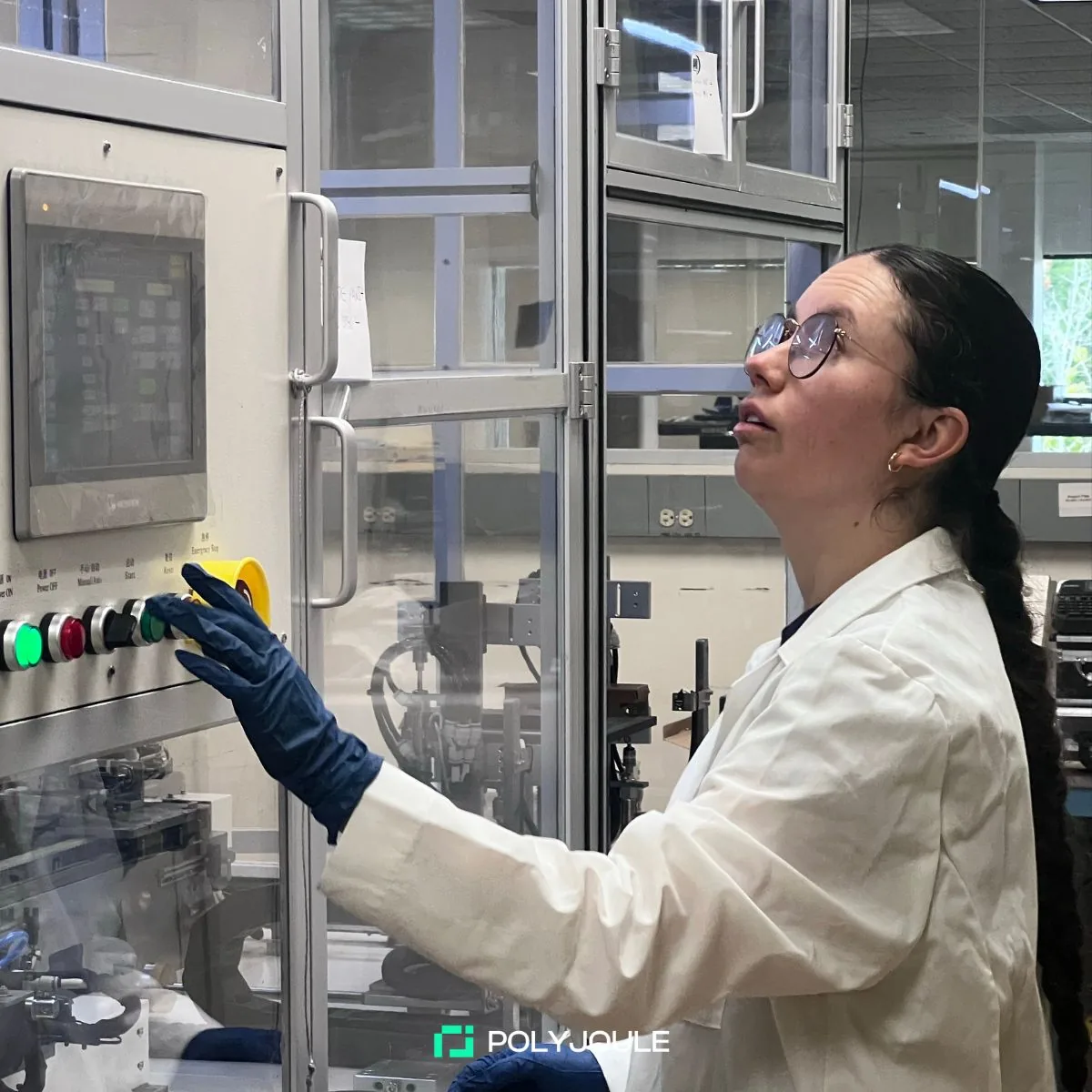
I scaled electrode coating paste to batches of about 60 kg and automated the mixing. My lab background is in polymer purification, catalytic resins, and materials analysis.
I design and build the controls that run process equipment: control cabinets, Raspberry Pi and National Instruments I/O, ODrive motor control, solenoid valves, pressure transducers, and scales. I also write the operator software: touchscreen interfaces, dosing recipes, and run logging.
I build the Tulip MES apps behind our electronic batch records, with digital work instructions, barcode and label printing, and automatic scale capture. I also write Python reports with statistical process control charts and monthly production counts for managers.
I lead a four-person team across the full prismatic-cell process: electrode coating, trimming and stacking, internal tab welding, can assembly, drying, and electrolyte filling. I write the weekly staffing schedule and work with equipment vendors and contract manufacturers.
My work began in a catalysis research lab in Colombia. At PolyJoule, I moved from conductive-polymer chemistry into process scale-up and then pilot-line leadership in about fifteen months.
Massachusetts · Oct 2022 – present
Jan 2024 – present
Nov – Dec 2023
My move from the lab into manufacturing. I took over coating-material mixing, and two months later I was leading the pilot line.
Oct 2022 – Oct 2023
Piedecuesta, Colombia · 2019 – 2020
Jan 2019 – Jan 2020
Cell assembly
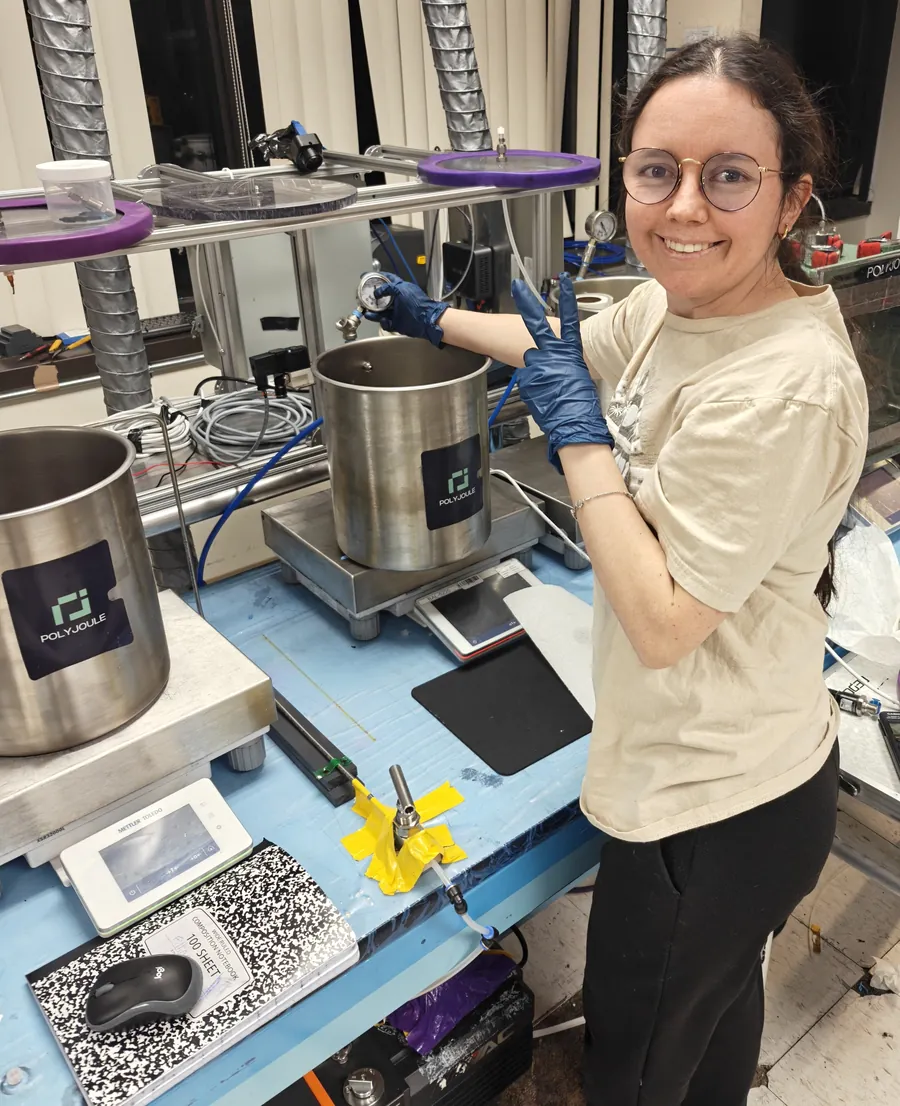
Filling is the step where liquid electrolyte is dosed into an assembled cell, typically under vacuum so it soaks fully into the electrodes. The dose has to match the amount of active material in that specific cell.
I automated our station with a scale, solenoid valves, and pressure sensors, and wrote the operator software. It looks up each cell’s electrode mass, calculates the target fill, runs the vacuum and nitrogen steps, and logs the result. Output rose from 1 to 16 cells per day, and I built four more stations.
Equipment ownership
A stacker builds the core of a prismatic cell by placing anode, separator, and cathode sheets in alternating layers. Layer alignment matters: a misplaced sheet can cause an internal short.
I am the system owner for the stacker on our pilot line, responsible for operation, maintenance, calibration, and troubleshooting, and I work directly with the equipment vendor. I wrote the operating workflow our operators follow. When shorts increased, I traced the cause to fixture misalignment, worked with the vendor to correct it, and added resistance checks downstream to track shorts cell by cell.
Electrode production
A coating line spreads electrode slurry onto a moving metal foil at a controlled thickness, then dries it in an oven before the electrode is cut to size.
I upgraded our line with a progressive cavity pump for steady slurry delivery, pressure transducers on the feed, an inline drying oven, and an operator display for line pressure, line speed, and cutter speed. I also set up the quality station where each electrode’s mass is read from a scale directly into the production record.
Process scale-up
Electrode slurry is a mix of active material powders, binder, and solvent, combined in precise proportions before coating. Our batches are about 60 kg, and the powders and solvent were weighed and added by hand.
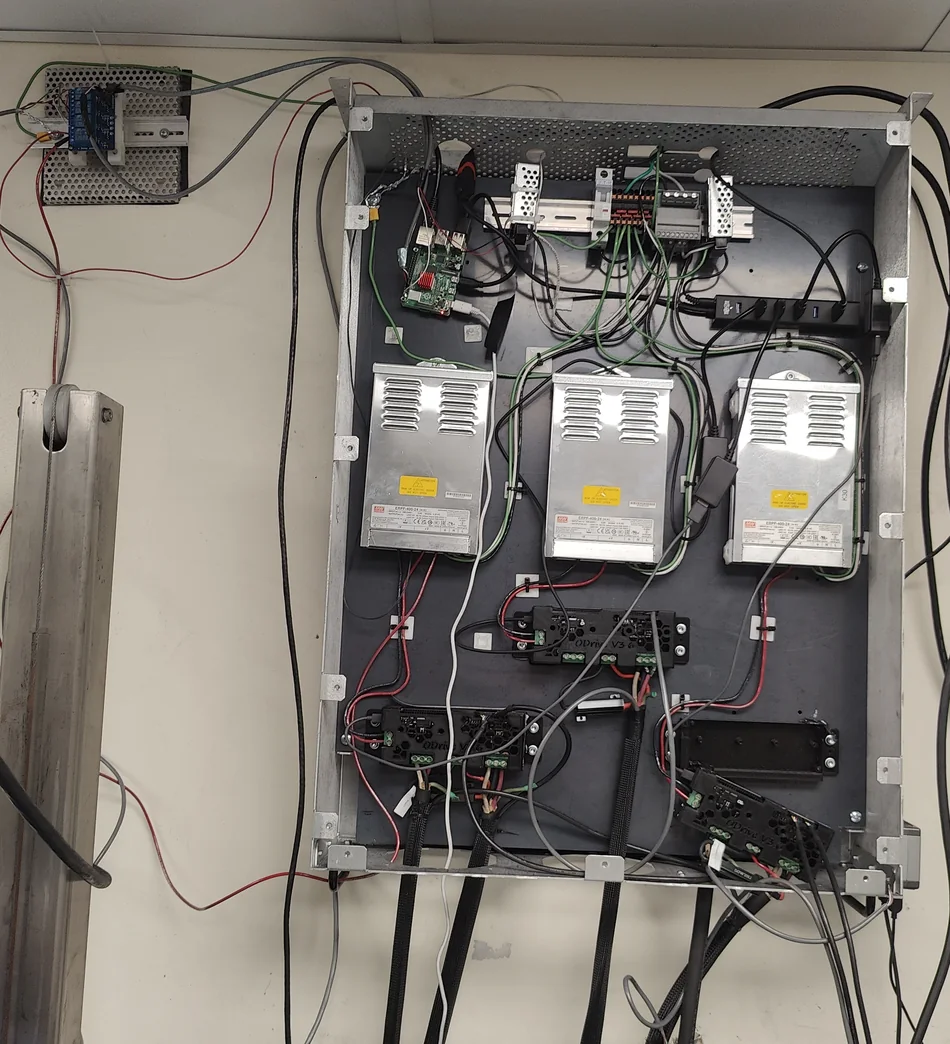
I designed and built an automated dosing system: motor-driven powder feeders and valve-controlled solvent dispensing, with scale feedback so each addition stops at its target weight. I built the control cabinets from scratch around a Raspberry Pi and motor controllers, and wrote the software that runs the recipe, starts the mixer, and records each batch. Mixing output doubled from one to two batches per week.
B.Sc. in Chemical Engineering
Universidad Industrial de Santander
Thesis: Synthesis of catalytic resins for the transformation of glycerol into aqueous phase.
Stoneham, Massachusetts
For engineering opportunities and professional inquiries, send me a message and I’ll reply by email.